In rally environments, persistence matters. But persistence is not the same as moving forward regardless of conditions. Sometimes the most responsible decision is to reduce speed, change the route, repair the machine, or stop.
The same distinction matters when children learn outdoors. If courage is taught only as ‘keep going,’ adults may accidentally reward silence, concealment, and obedience at the very moment a child needs to report discomfort or uncertainty.
Risk Education begins with a different promise: challenge will be real, but unnecessary danger will not be treated as a lesson. A child remains a participant whose observations and stop signal matter.
A lesson from rally
There is a moment when ‘keep going’ becomes the wrong lesson.
A route changes with weather, visibility, fatigue, traffic, and the condition of a vehicle. A plan that was reasonable at the start can become unreasonable later. Experienced people do not prove courage by ignoring new information; they use it to make a better decision.
Children deserve the same logic. Resting, asking a question, reporting fear, or withdrawing from a task can be evidence of awareness rather than weakness. The educational goal is not automatic compliance. It is responsible judgment.
Courage is not always the next metre. Sometimes it is the sentence: ‘Something has changed, and I need to stop.’
A clear boundary
Risk Education is not hardship for its own sake.
A useful challenge gives a learner something meaningful to observe, decide, practise, and reflect upon. Unnecessary danger adds exposure without adding educational value. More fear, more speed, or a harder route does not automatically create more growth.
Adults therefore carry the duty to separate manageable uncertainty from hazards a child cannot reasonably assess or control. That boundary must be set before the activity and revised whenever people, equipment, terrain, or weather change.
Operational reality
Safety is a system, not a helmet.
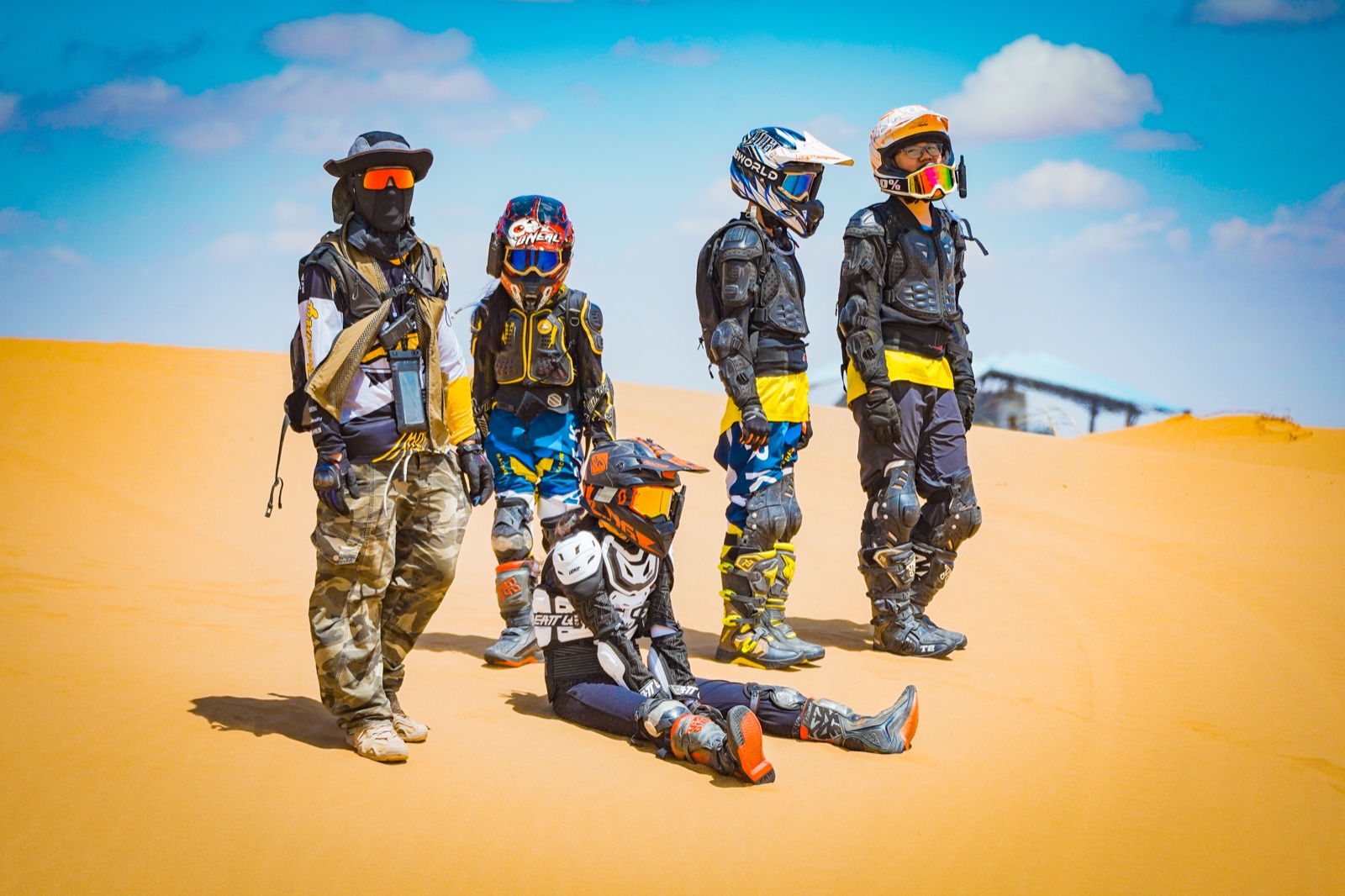
Protective equipment matters, but it is only one layer. A credible system also considers whether the child fits and can control the vehicle, whether the equipment is suitable and correctly fitted, whether coaching is progressive, and whether supervision matches the terrain and the group.
The route must be authorised and assessed; weather and visibility need stop criteria; communication and evacuation cannot be improvised after an incident. Weakness in one layer cannot be repaired simply by adding more armour to another.
Agency inside a boundary
The child must keep a voice.
A stop signal is useful only if a child believes it will be heard. Adults need to explain, before the activity begins, how to report pain, equipment problems, loss of confidence, or confusion—and what will happen next.
Slowing down, resting, stepping down a level, and stopping should be normal options, not punishments. This does not remove discipline. It teaches children to communicate evidence, accept guidance, and take responsibility for themselves and the group.
Adult responsibility
What adults must decide before a child starts.
Adults—not children—must verify the current coach roles, vehicle condition, protective equipment, progression plan, route, weather thresholds, communication coverage, first-response capability, and medical evacuation path. Yesterday’s check is not an automatic pass for today.
No fixed coach-to-child ratio can answer every situation. What matters is whether the team can maintain sight and communication, lead and sweep the group, respond to one child without abandoning the others, and end the activity when the system no longer has enough margin.
Evidence with limits
Standards and guidance need context.
Where a programme operates, current law, applicable standards, venue rules, manufacturer instructions, and the written plan for that edition come first. A standard for one product does not certify the whole programme, and an old photograph cannot prove the current team, route, vehicle, or emergency arrangement.
Sources such as the US Consumer Product Safety Commission, Centers for Disease Control and Prevention, and National Weather Service are useful comparative guidance. They are not Chinese law or a universal operating standard. The linked Chinese source article identifies the official references and their limits.
The first skill of the future
What I mean by courage.
Courage is the capacity to act responsibly when certainty disappears. Sometimes that means beginning. Sometimes it means continuing after reflection. Sometimes it means protecting a teammate, changing the plan, or refusing to hide a problem.
This is the idea I am developing in my forthcoming book, Risk Education: How Courage Becomes the First Skill of the Future. Publication details will be added only when they are confirmed; the principle is already clear: judgment grows when children are challenged without losing their voice.
A helmet cannot make a poor decision safe.A challenge is educational only when adults hold the boundary.The right to stop is part of learning how to move forward.
No responsible programme can promise zero risk. It can, however, show how decisions are made, what evidence is checked, who has authority to stop, and how a child will be heard.
That is where safety and courage meet: not in a slogan, but in a system that remains willing to change course.