A child can be protected from every visible difficulty and still remain unprepared for an uncertain world.
That is the tension at the heart of modern education. Care, safety, and responsible boundaries matter. But if protection becomes the only logic, children lose opportunities to practise judgment, recover from setbacks, cooperate under pressure, and discover that fear does not have to decide their path.
Risk Education is my name for a more balanced approach. It does not celebrate danger. It creates structured, ethical, developmentally appropriate encounters with uncertainty, so that knowledge can become capability and courage can become a lived skill.
The educational problem
Protection is necessary. Preparation is necessary too.
Many children are taught how to achieve in environments where the questions, rules, and desired outcomes are already known. Yet life rarely offers that degree of clarity. New technology, changing work, difficult relationships, unfamiliar places, and unexpected setbacks all require action before certainty arrives.
The answer is not to remove safety. It is to place safety and growth in the right relationship. Children need adults who set boundaries, read conditions, and carry responsibility. They also need room to make decisions, feel hesitation, try again, and experience the consequences of manageable choices.
The goal is not to keep children safe from life. It is to help them become capable of living it.
A clear boundary
Risk Education is guided challenge, not reckless exposure.
Risk is often confused with danger. In education, the more useful meaning is uncertainty with consequence: a situation that asks the learner to observe, judge, decide, adapt, and take responsibility.
A sound program never uses danger as spectacle. It matches challenge to age and ability, prepares participants, uses trained guides and appropriate equipment, monitors conditions, and keeps a clear route to intervention. The educational value comes from agency and reflection, not from maximizing fear.
This distinction matters for parents and educators. Overprotection can weaken preparation, but poorly designed challenge is not education either. Risk Education occupies the responsible space between those two failures.
The Risk Education Framework
Three layers: awareness, competence, and culture.
Risk Awareness begins with noticing. A learner reads terrain, weather, equipment, other people, emotional state, and possible consequences. Awareness turns vague fear into information that can be examined.
Risk Competence develops through practice. It includes decision-making under pressure, emotional regulation, physical coordination, communication, cooperation, and the ability to change a plan when conditions change.
Risk Culture is the mature integration of values and behaviour. It balances exploration with responsibility and recognizes that one person’s choices affect the safety and confidence of others. The progression is simple: understand uncertainty, learn to work with it, and build a responsible relationship with it over time.
Whole-person development
Four dimensions: physical, psychological, social, and existential.
Challenge acts on the whole person. The physical dimension develops movement, coordination, stamina, and environmental awareness. The psychological dimension develops fear management, patience, recovery, and composure.
The social dimension appears whenever participants rely on one another: communicating clearly, asking for help, offering support, and becoming trustworthy. The existential dimension arrives when a learner begins to ask what effort, responsibility, courage, and a meaningful life are for.
A strong educational journey does not isolate these dimensions. It lets them reinforce one another, then gives participants time to reflect so that an intense experience becomes durable learning.
From theory to practice
The Little Knights model makes the journey the curriculum.
Little Knights was built around a practical question: how can real challenge become a meaningful educational system for children and families? Its answer is not a single activity. It is a guided journey with continuity, shared purpose, changing conditions, and development over time.
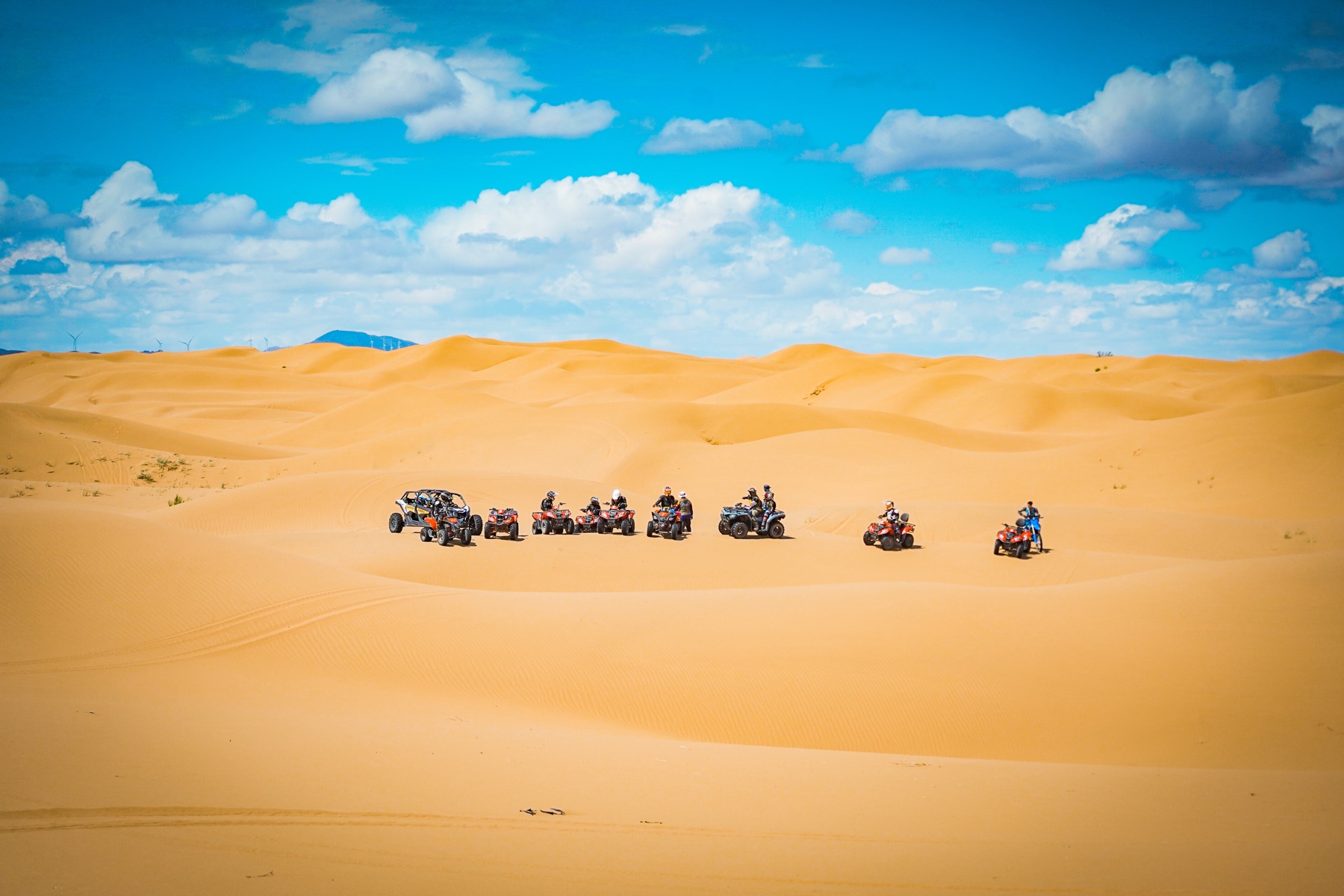
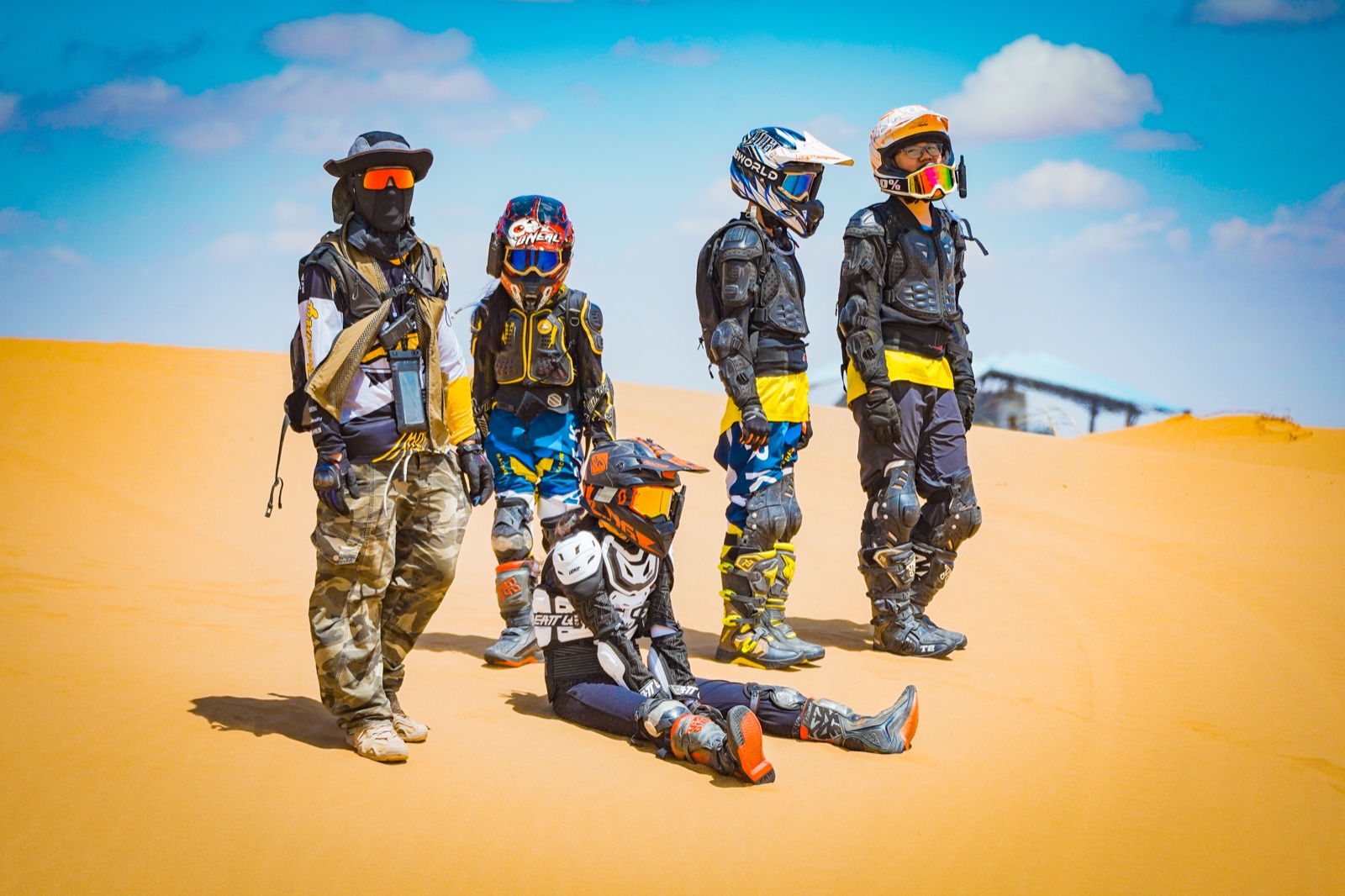
Children are participants, not passengers. They learn to notice the environment, prepare equipment, manage effort, communicate with teammates, continue after frustration, and help others. Adults do not disappear; they become guides who hold the boundary while allowing genuine agency inside it.
Families also become part of the learning culture. Children see how adults respond to fatigue and uncertainty. Adults witness courage and growth as they occur. The result is more than a memorable camp: it is a shared language of preparation, responsibility, and trust.
The first skill of the future
Courage is a human capacity that can be cultivated.
Courage is often described as a heroic trait possessed by unusual people. In education, it is more useful to see courage as a developmental capacity: taking one more considered step after hesitation, staying present when a plan fails, asking for help, and acting responsibly without complete control.
This is why courage may become the first skill of the future. Knowledge remains essential, but knowledge alone cannot decide what to do when conditions are new. Human beings also need judgment, steadiness, adaptability, and the willingness to begin before every answer is available.
Forthcoming book
Risk Education is a framework still being built.
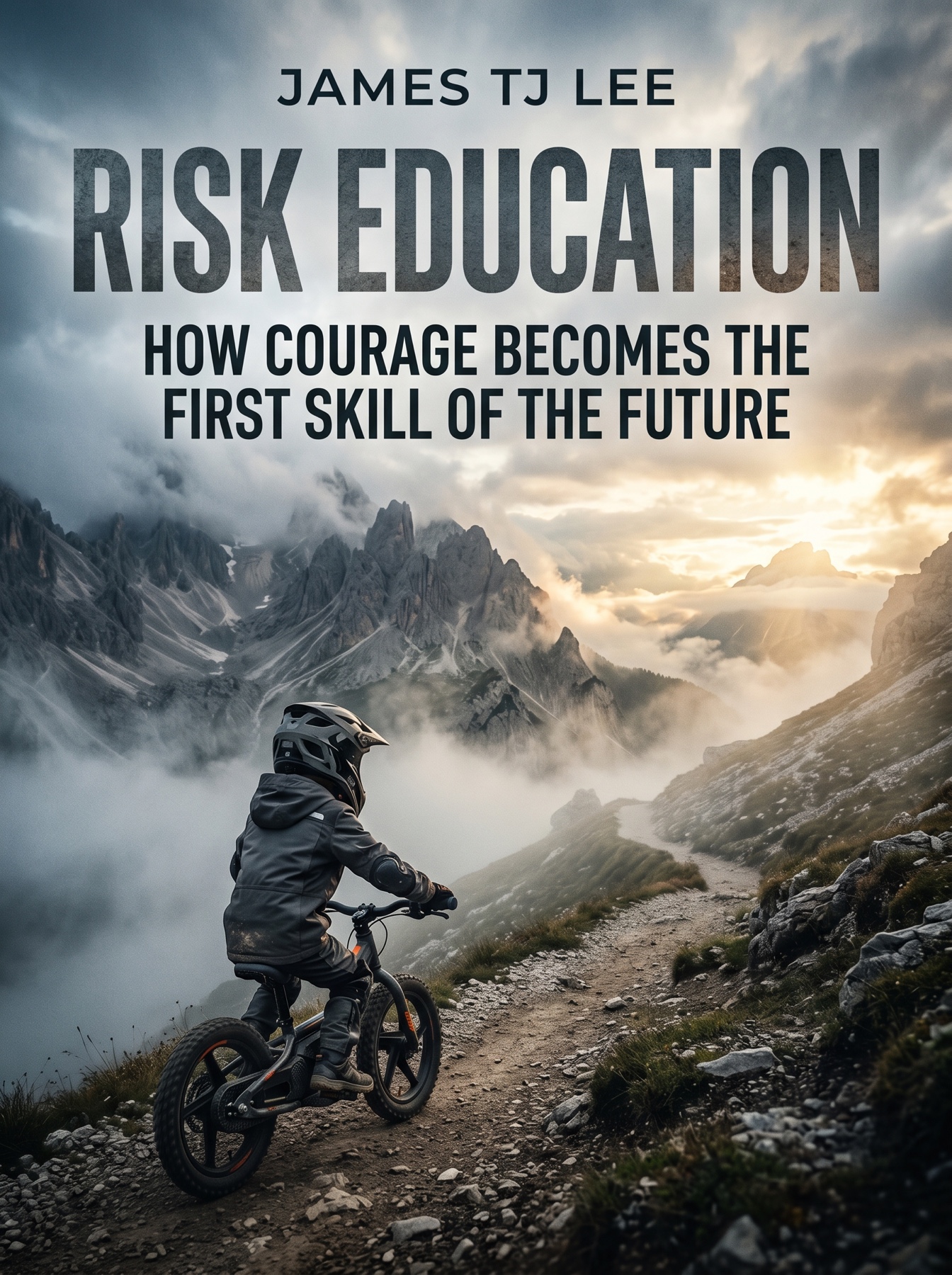
My forthcoming book, Risk Education: How Courage Becomes the First Skill of the Future, develops this argument across education, psychology, family culture, adventure, long-distance challenge, rally learning, program design, the Little Knights model, and the future of the field.
The English manuscript and cover are in preparation for publication. No final publication date, ISBN, ASIN, price, or purchase link is being announced on this page yet. The official book page on jamestjlee.com will remain the primary source for verified updates.
Safety and growth are not enemies.Protection and preparation belong together.Courage is not the absence of fear; it is the capacity to act responsibly when certainty disappears.
Risk Education begins when adults stop asking only how to remove uncertainty and begin asking how to guide children through it with care.
The road is still being built. That is precisely why educators, parents, researchers, guides, and communities are invited to help build it well.