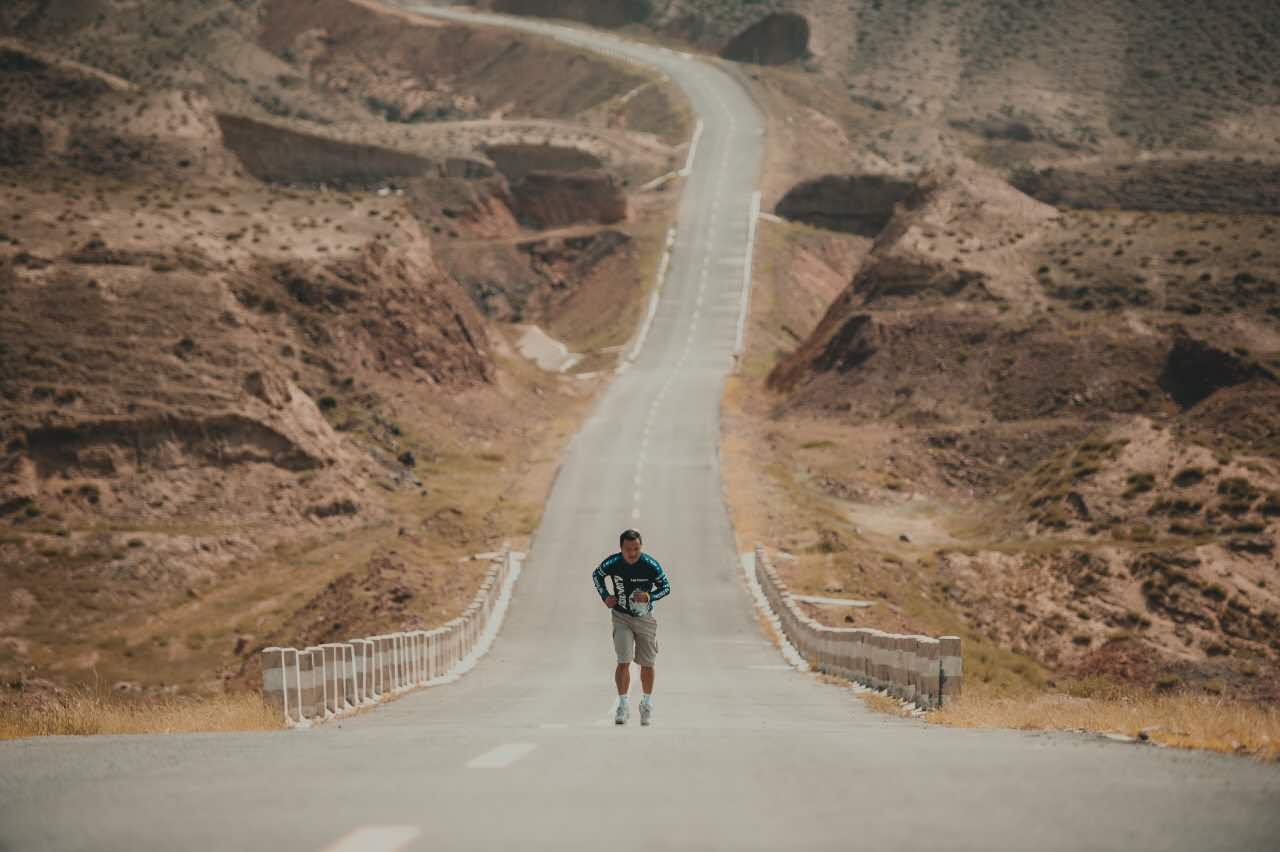
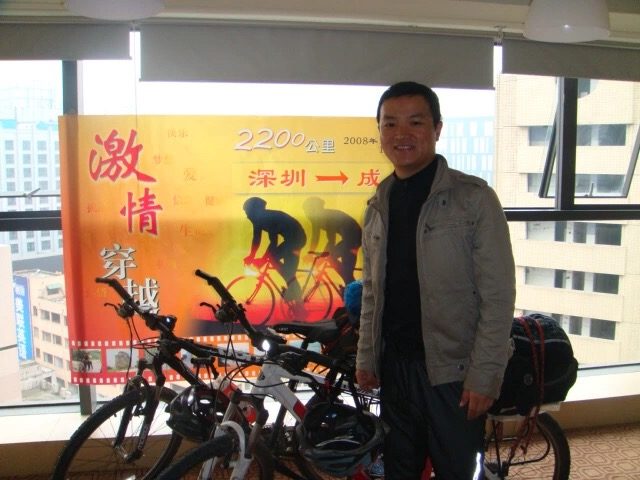
In 2008, I set out on a bicycle from Shenzhen and rode toward Chengdu, a journey of roughly 2,200 kilometers. I did not begin with a theory about roads, a plan for a personal brand, or the idea that the experience would one day become material for books and songs. I only knew that I wanted to travel the distance under my own power and discover what the road would ask of me.
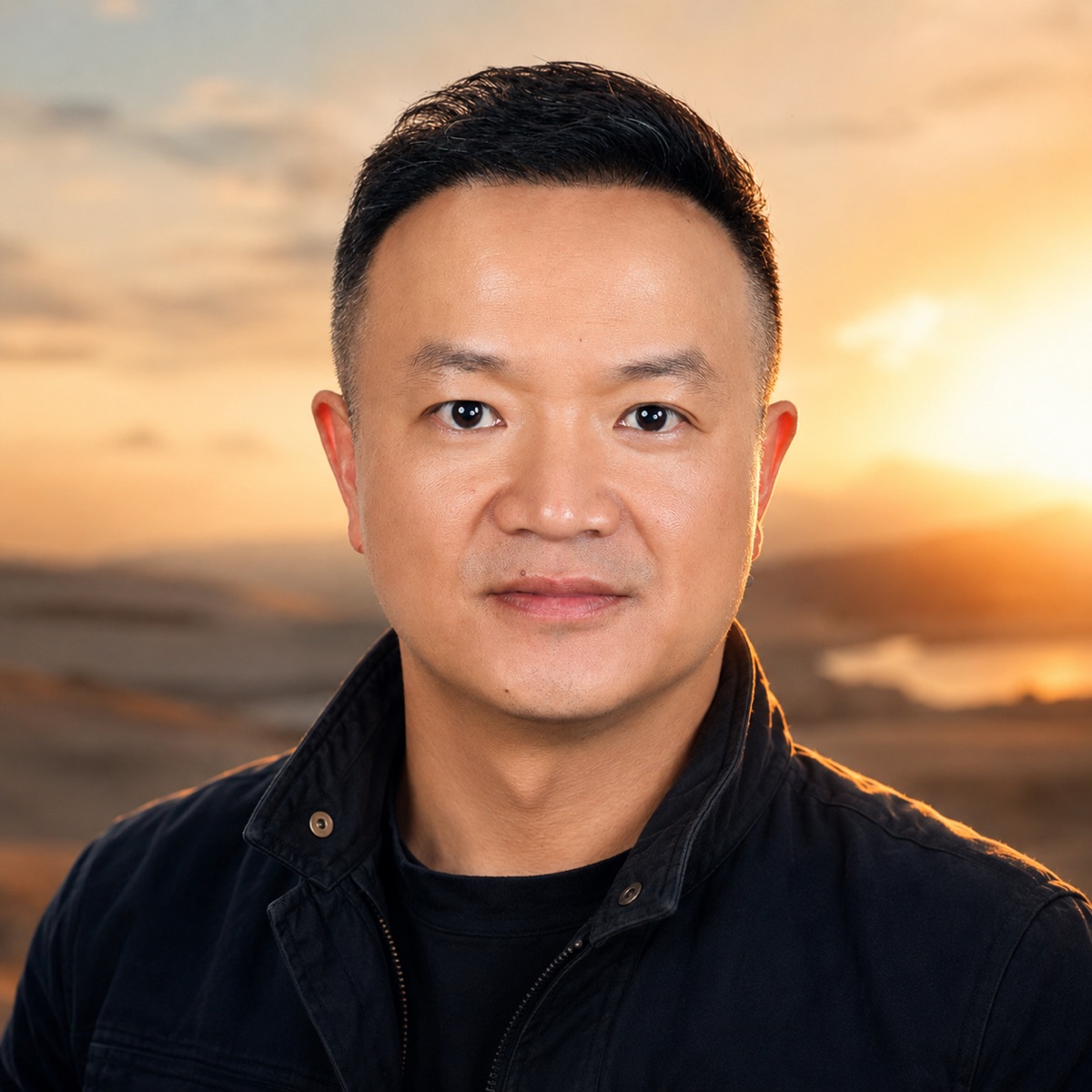
My name is Li Tiejun, and I am known internationally as James TJ Lee. I am an author and music creator, the founder of ClubHEB, the creator and long-term practitioner of the Little Knights Silk Road Rally program, a rally driver and explorer, and a researcher of the ways routes connect people, cities, cultures and nature. None of those descriptions arrived all at once. They grew, one after another, from roads I first entered without knowing where they would lead.
2008 · Shenzhen to Chengdu
A road whose destination I could not yet see
The number is easy to repeat. The experience is harder to compress. On a long journey, distance stops being an abstract measurement. It becomes the next climb, the next decision, the next hour of uncertainty, and the choice to begin again in the morning. A map can show where a road goes, but it cannot tell you who you will be after travelling it.
The ride from Shenzhen to Chengdu did not make me an author or a musician. It did something more basic: it taught me to pay attention. It taught me that a road is never only a line between two places. It is a sequence of choices, encounters, mistakes and adjustments.
Years later, when I entered off-road rallies, began working with children and families, wrote about what I had learned, and created music under the name James TJ Lee, I was still following that first lesson. I had not changed subjects. I had found new forms for the same question: how does a person continue when the whole route cannot yet be seen?
A map can show where a road goes, but it cannot tell you who you will be after travelling it.
Rallying
What we truly possess is the road we have traveled ourselves
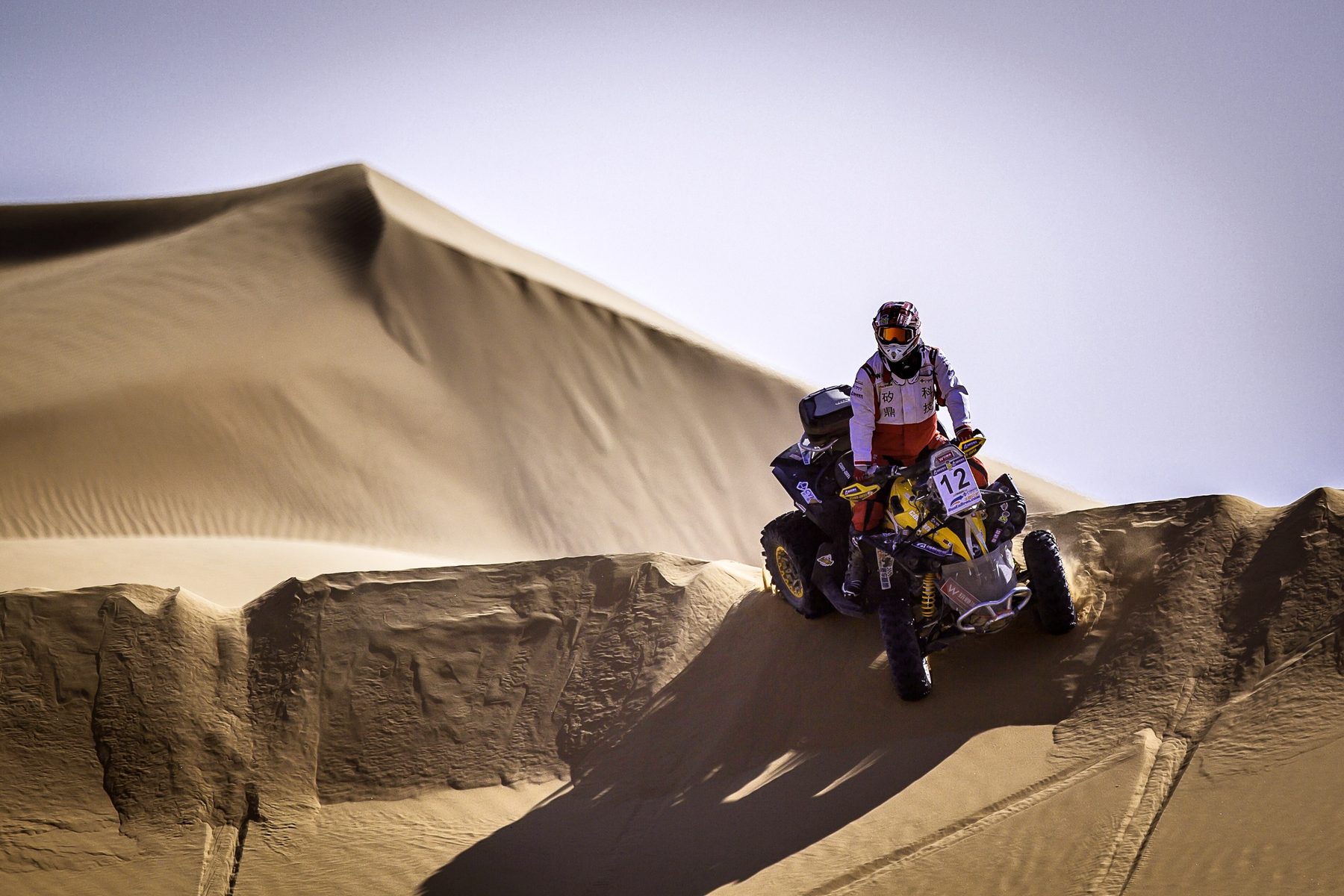
Titles can be useful, and results matter. In rallying, a finishing position records something real. At the 2014 Taklimakan Rally, I finished second in the ATV category. Yet even a result like that cannot contain the full experience that produced it.
In 2010, I began preparing a team for the following year's Taklimakan Rally. In 2011, the team entered under the sponsor name Jiangsu Xiding Technology Team. I served as team manager, Wang Xiaodong and Cao Lu as drivers, and the team received the rally's rookie award. I continued into long-distance off-road rallying, which brought me into landscapes where plans meet terrain: desert, Gobi, long stages and uncertain conditions. What I remember are the quieter things—the discipline before departure, the need to read a route carefully, the moment a judgment has to be made without complete information, and the work required to continue when something goes wrong.
Rallying made consequence immediate. If you lose direction, ignore a warning from the machine, or fail to communicate with the team, enthusiasm alone will not solve the problem. You must slow down enough to understand what has happened. You must decide what can be repaired, what must be left behind, and how to move again without pretending the setback did not occur.
Mechanical failure is never only mechanical. Navigation is never only technical. Both reveal how a person responds to uncertainty. A team also reveals itself under pressure: who speaks clearly, who listens, who takes responsibility, and who still has the patience to help when fatigue has made everyone less generous.
I do not romanticize hardship. A broken machine is still a problem; being lost is not automatically profound. Difficulty becomes meaningful only if we are willing to learn from it. What stays with us is what we have accepted responsibility for—the difficult decisions, the failures we did not hide from, the people we learned to trust, and the roads we traveled ourselves.
ClubHEB · Little Knights
I began by doing something I loved
On 18 June 2012, I formally established Huaen Brothers (ClubHEB). At the beginning, I was not trying to invent a grand business model. I loved rallying, and I believed that the real road could train qualities that ordinary explanations could not.
There is a difference between turning an interest into a product and building the capacity to create lasting value for others. The first can happen quickly. The second takes repetition, responsibility and time. An interest becomes a vocation only when you are willing to keep doing the less visible work: preparation, safety, maintenance, coordination, reflection, and the patient improvement of a system.
Around 2014, that work began developing into Little Knights, an education system built around rally tasks for children and families. Over the years, I have accompanied children and their families through real training on Silk Road routes, in deserts and across the Gobi. Through Huaen Brothers, I was also involved in producing the Jiangsu Satellite TV family off-road reality program 《小小骑士一起冲》.
Television, events and names are not the center of the story. The center is a question that has stayed with me: what happens when a child is trusted with a real task?
Education in the real world
What can children learn from rallying beyond driving?
Little Knights is not based on the idea that every child should become a professional driver. Driving is only one visible part of a larger process. A route asks children to observe, navigate, understand a machine, cooperate, make independent judgments and accept responsibility for the consequences of a decision.
A classroom can explain a principle. A road tests whether the principle can be used. When the route is unfamiliar, when a team has to divide work, or when a repair must be completed before moving on, a child is not answering a hypothetical question. The task is real, and so is the need to contribute.
That changes the role of the adult. The adult cannot simply deliver instructions and then measure obedience. We must decide when to explain, when to protect, when to wait, and when to let a young person work through uncertainty. Responsibility cannot be learned if every meaningful decision has already been made by someone else.
Navigation teaches more than direction. Repair teaches more than tools. Teamwork teaches more than politeness. Together, they show that progress depends on attention, communication and the willingness to try again after a mistake.
I have watched the relationship between children and parents change when both face a genuine task. They begin to see one another not only through familiar family roles, but as members of a team. A parent may discover that a child can make a calm judgment. A child may begin to understand the weight carried by another person. These changes cannot be forced by a slogan. They emerge through shared experience.
Education does not belong only to the classroom. It also happens in a route, a difficult assignment, a team, and the quiet moment after failure when a person decides whether to continue.
Books
Why did I begin writing books?
As the number of journeys, races and training projects grew, I realised that holding another event was not enough. An event ends. People return home. Memories become shorter and smoother than the experience itself. Important lessons can disappear precisely because they seem obvious to those who lived them.
Some things needed to be written down: the people met on the road; the mistakes behind a later judgment; the ways children changed during a journey; the relationship between a route and the cities and cultures through which it passes; the problem of turning a personal interest into work that can last; and the question ordinary people face when no map can choose a life on their behalf.
I did not begin writing in order to manufacture authority. I write because experience kept leaving questions behind. A book allows me to stay with those questions longer than a stage, a conversation or a short post allows.
Writing also changes memory. When I try to describe a decision honestly, I cannot keep only the version that makes me look certain. I have to return to what I did not know at the time. I have to distinguish what the road taught me from what I later wished it had taught me.
My books continue to draw on rallying, life on the road, education, cities and cross-cultural travel. They are not instruction manuals for copying my route. They are records offered to people who may be facing a different landscape but a related question: how can a person act when the future is not yet clear?
Writing is not a way to manufacture authority. It is a way to return lived experience to those who come later.
Music
Why did I begin writing songs?
Writing can examine a decision, establish context and follow an argument. But not every part of a road arrives in the form of an explanation.
There is the silence before a start. There is moonlight over a desert at night, the solitude of long-distance cycling, friends arriving from different directions, the emptiness after a rally has ended, and the resolve that appears before another departure. These experiences have meaning before they have sentences. Music gives them another shape.
When I create music as James TJ Lee, I am not stepping away from rallying, writing or research to invent an unrelated identity. The songs come from the same source. They are what the road sounds like after it has remained in the body for a long time.
A book can ask a reader to stop and think. A song can find someone while they are moving. It can travel through a language differently, carrying rhythm and feeling before every reference is understood. For a person interested in routes and cultures, that possibility matters to me.
I have created songs connected to rallying, roads and life. I do not see them as decoration for the stories. Sometimes the music reaches the emotional truth of an experience more directly than an account of what happened. The two forms do different work, and together they let me tell a more complete story.
Creation
Why does real life matter even more in the age of AI?
Writing, publishing, composing, distribution and building an international website have often required substantial funding, specialist skills, distribution channels or institutional support. Today, AI and digital tools can help an independent creator organize material, develop a manuscript, translate a work, produce music, build a website and reach readers across borders.
That change is important. It gives more people the practical means to shape and share work that might once have remained private. It also creates a temptation to confuse access to tools with possession of something worth saying.
AI can lower the threshold of creation. It cannot live a life on the creator's behalf. It did not ride the 2,200 kilometers from Shenzhen to Chengdu for me. It did not enter a desert stage, face a failure, work with a team, take responsibility for a child, or bear the consequences of a choice. A tool can help organize the record. It cannot become the origin of the record.
That is why I believe lived experience becomes more, not less, important as creative technology improves. When polished words and images are easy to produce, readers need to know what stands behind them. A person's irreplaceable material is not a style generated on demand. It is the life that person has actually lived, examined and accepted responsibility for.
The best use of new tools is not to create a more impressive mask. It is to help a real voice travel farther without losing its source.
AI can lower the threshold of creation. It cannot live a life on the creator's behalf.
jamestjlee.com
Why did I build my own website?
I built jamestjlee.com because I needed a lasting home for work that had grown across different forms: books, music, rally stories, long-distance routes, photography and film, creative notes, and my continuing research into cities, culture and the connections routes make possible.
This website is not simply an online business card, and it is not a launch announcement that will become irrelevant when the next update arrives. It is an independent place where the work can accumulate, relate to earlier work and remain available over time.
Third-party platforms are useful. They can help a book, song or story be discovered, and some may serve as channels through which readers can obtain digital work. But a platform is not the same as a home. An independent website allows a creator to keep the context around the work, connect one project to another and build a long-term relationship with readers.
Li Tiejun and James TJ Lee are the same person. The two official websites serve different readers rather than representing different identities. jamestjlee.com is my international official website, publishing English and Traditional Chinese work for global readers, overseas Chinese communities, international media, researchers and potential partners. litiejun.com is my Simplified Chinese official website, created primarily for readers in mainland China.
Together, the two sites form one body of work. They share the same facts and the same person, while allowing each language version to be written for its own readers rather than reduced to automatic translation. On jamestjlee.com, I will continue to publish work connected with my books, music, Little Knights, the Silk Road, Road to Dakar, new cross-cultural journeys and a wider idea I call The James Way.
The James Way
The James Way is not one fixed route
The James Way is not an invitation to copy my life. It begins with a simple belief: a person finds direction by entering the real world, accepting a task, paying attention to what happens, and continuing to adjust.
For me, that belief can be seen in the bicycle road from Shenzhen to Chengdu, in a Silk Road rally route, in a road beginning in Nanjing, or in the long tradition of routes connecting Portugal and Spain. The geography changes. The human question remains.
We often want certainty before we start. Roads rarely offer it. They offer signs, conditions, companions and consequences. Direction emerges through the relationship between those things and the person who must decide.
The James Way does not claim that hardship is noble or that everyone should cross a desert. Your road may be a piece of work, a family responsibility, a course of study, a journey, or a decision that has been postponed for years. What matters is that it becomes yours through honest action.
My route cannot supply another person's answer. At most, it can provide evidence that a life does not have to be understood in advance to be lived with purpose. We can begin, learn from the ground beneath us, and revise our direction without treating revision as failure.
That is the thread connecting rallying, education, writing, music and my research into cities and culture. A route is both physical and social. It changes what we notice, whom we meet and how we understand a place. This is the work I am continuing, including my current research on cities and culture in a sociology-related doctoral program at the University of Coimbra in Portugal.
The James Way does not ask anyone to copy my road. It asks each person to find and travel a road of their own.
Another departure
Beginning again
Looking back, I can see a line from the bicycle ride in 2008 to rallying, ClubHEB, Little Knights, books, music, research and this website. At the time, the line did not exist. There were only separate departures and the next decision in front of me.
That is still how the future looks. I am not building jamestjlee.com to present a finished life. I am building it to keep an honest record of work in progress: roads traveled, ideas tested, songs created, books written, and questions that remain open.
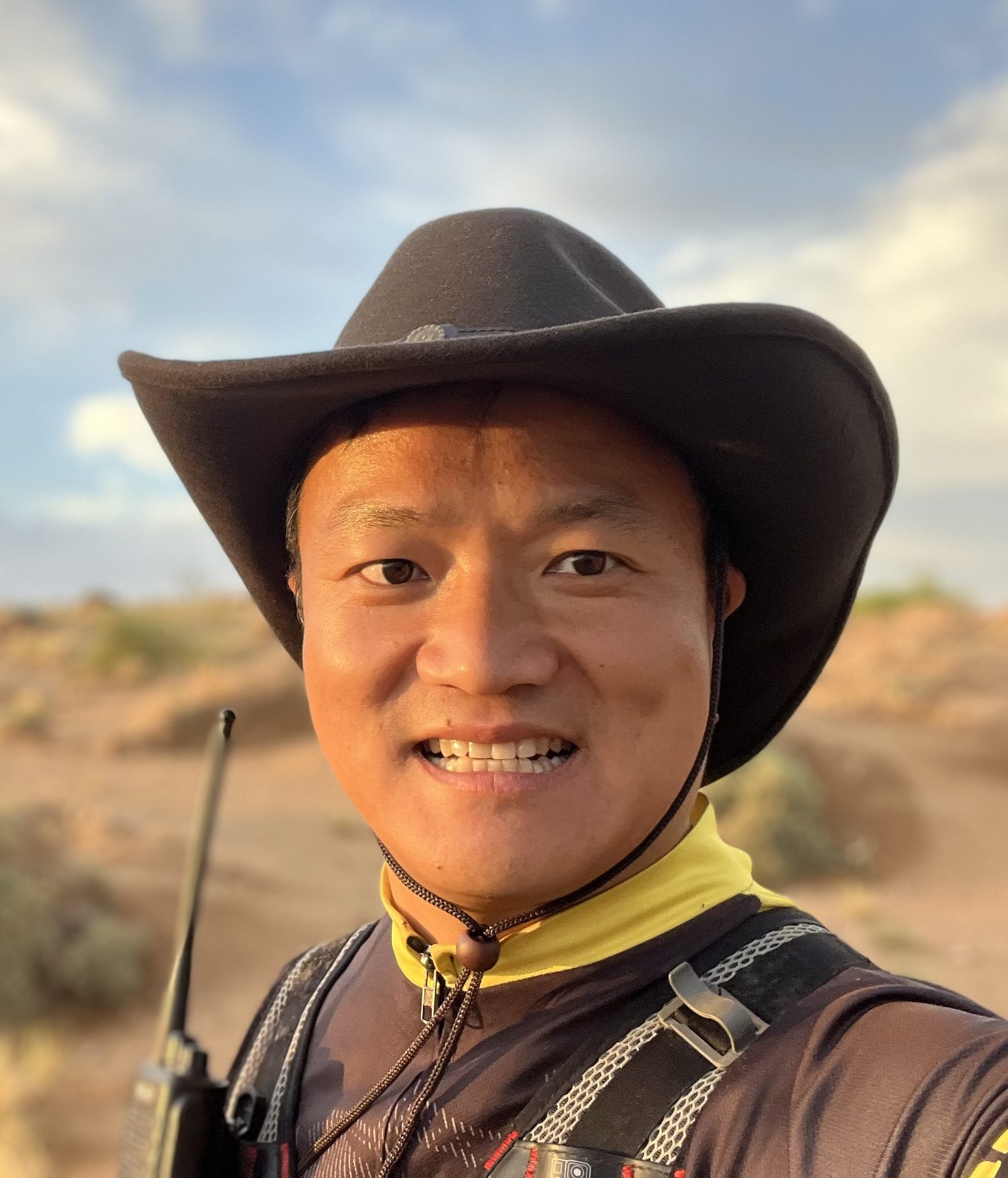
To turn the roads I have traveled into books,to turn the voice within me into songs,and to turn one person's passioninto work that can be shared with the world.
This is the personal website of James TJ Lee.
It is also the starting point of another journey.
Welcome to The James Way. Let us begin again from here.