Whom do you truly serve?
Define a specific child, family expectation, and use situation—not an imaginary audience of everyone.
 Coming soon
Camp programs · family growth
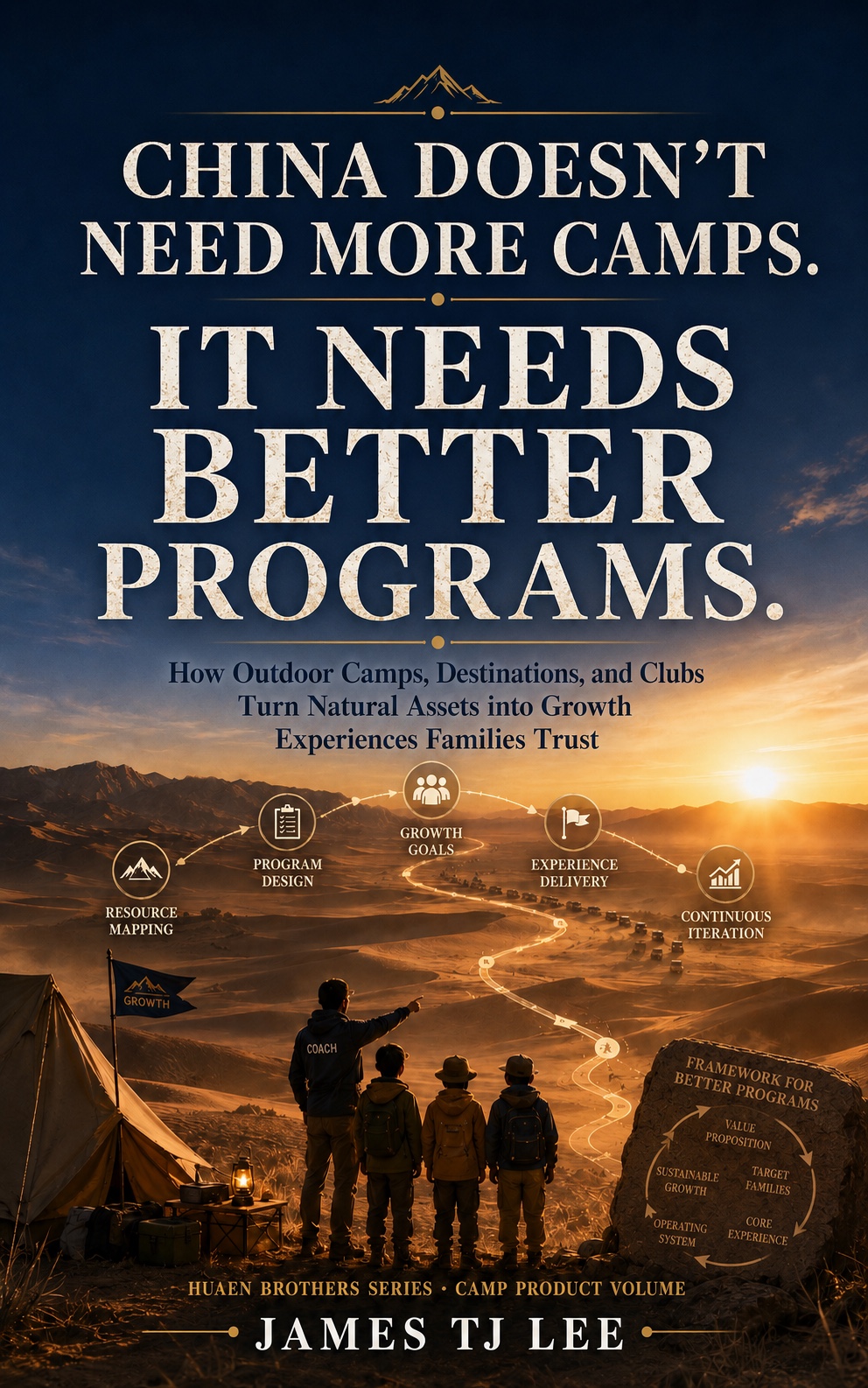
CHINA DOESN’T NEED MORE CAMPS. IT NEEDS BETTER PROGRAMS. shifts the focus from adding facilities to designing stronger programs. It presents a framework connecting resource mapping, program design, growth goals, experience delivery, and continuous iteration for camps, destinations, and clubs. The direct digital edition is in preparation.
Preview pending — a public sample will be added after the publication text is confirmed.
Forthcoming book · official primary page
Natural assets attract attention. A durable youth program turns them into age-appropriate challenge, real tasks, necessary cooperation, professional protection, honest reflection, and a next step families can understand.
The central idea
Mountains, deserts, rivers, forests, routes, vehicles, and facilities create possibility and attention. They do not automatically create educational purpose, family trust, repeatable delivery, or long-term progression.
Drawing on the mistakes and field practice of Huaen Brothers and Little Knights since 2012, the manuscript distinguishes an activity, a program, and a growth system—and asks whether the system can still work on an ordinary day, without a camera or the founder standing on site.
The manuscript’s central framework
Define a specific child, family expectation, and use situation—not an imaginary audience of everyone.
Connect the activity to a real task and developmental opportunity, rather than relying on novelty or scenery.
Make age fit, coach behavior, safety systems, evidence, communication, and honest limits visible.
Build a program that works during ordinary sessions, changing weather, staff handovers, and the founder’s absence.
Design an appropriate next step based on readiness and evidence, not an automatic repeat sale.
A program worthy of trust connects natural assets, real tasks, professional coaching, safety responsibility, family communication, and long-term growth.
A lived reference
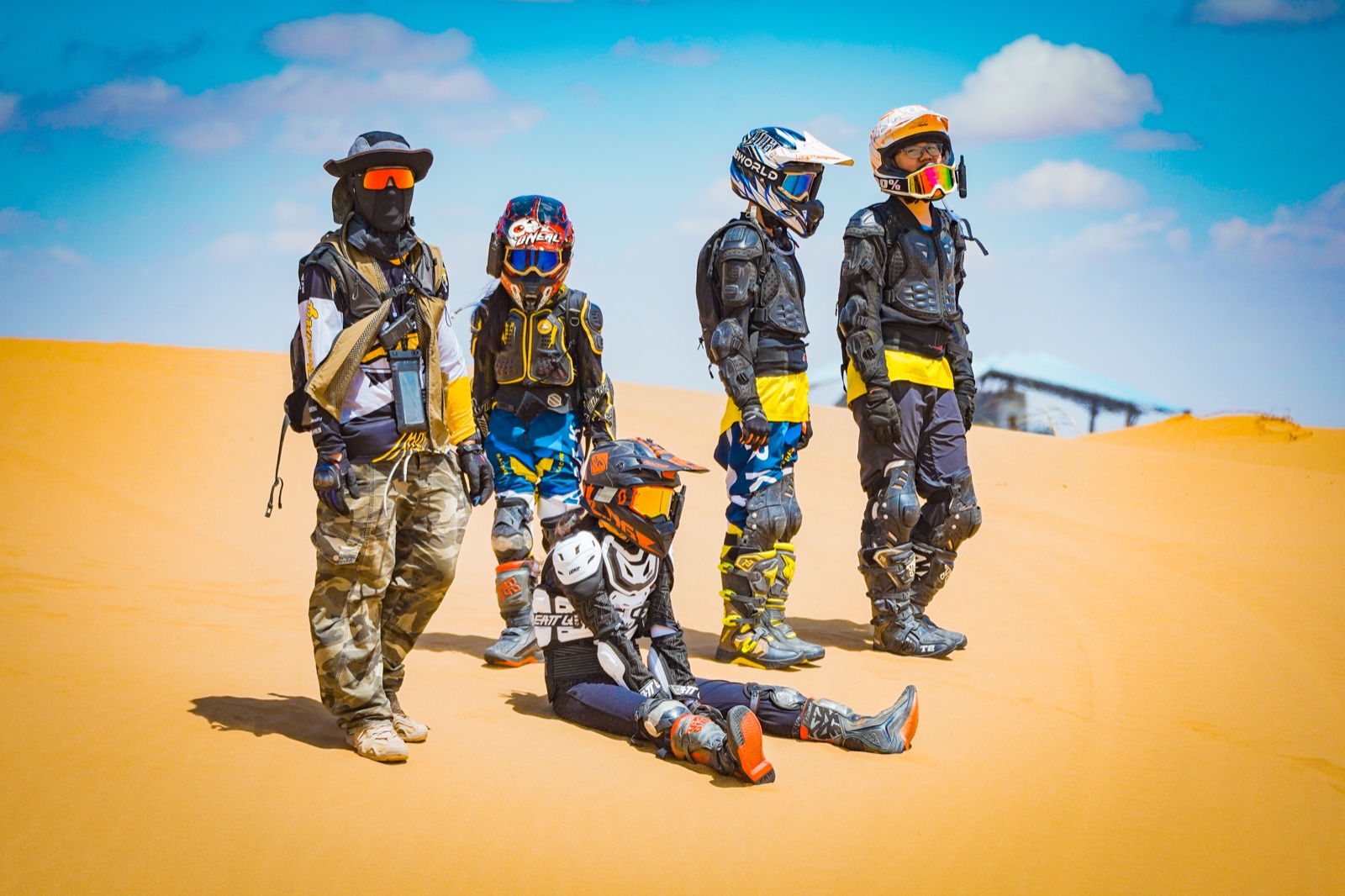
The Zhongwei and Tengger Desert practice shows how routes and rally can become a learning loop of challenge, task, cooperation, debrief, and another attempt. The book argues that other places should keep their own names and stories while adapting the method to forests, islands, cycling routes, farms, villages, and other real environments.
Who the book is for
The manuscript is written for camp operators, destination teams, outdoor educators, coaches, program designers, sports and outdoor enthusiasts entering the field, potential partners, and parents who want to ask better questions. It is a method book, not a safety certification or a substitute for legal, medical, insurance, safeguarding, or qualified risk advice.
Behind the book
James writes from lived experience—rally dreams, entrepreneurship, travel, difficult choices, and the continuing work of turning an ideal into a sustainable life. Each book is part record, part reflection, and part invitation to begin your own meaningful work.