Founder Essay · AI-age Globalization
Going Global Again:A Founder’s Reflection on Reconnecting People, Places and Purpose in the Age of AI
The central question
Global capability is becoming easier to access. Meaningful connection still has to be earned through people, place, responsibility and shared experience.

James TJ Lee reflects on how rally racing, China, Silicon Valley, Finnish Lapland and AI shaped a more human idea of globalization—and the thinking behind Going Global Again and THE SISU RALLY.
Introduction
Connection Is More Than Transmission
AI connects information faster than at any other time in human history. A sentence can cross languages in seconds. A small team can research a market, develop a visual identity, build a prototype and speak to people on another continent without first assembling the kind of institution that such work once required.
This is an extraordinary change. It is also easy to misunderstand.
The movement of information is not the same as the meeting of people. Translation is not yet understanding. Reach is not yet trust. A shared digital platform does not mean that we share the same memories, assumptions, risks or reasons for acting.
The more friction technology removes, the more clearly we can see the connections it cannot make for us. Meaningful human connection still asks for attention. It asks us to enter another person’s context without immediately converting it into our own. It asks us to spend time in a place, to learn what matters there, and to accept responsibility for what our presence changes.
This is where my current work begins.
My name is James TJ Lee, also known as Li Tiejun and 李铁军. I am the founder of Huaen Brothers, the creator of Little Knights, the author of Going Global Again, and the creator of THE SISU RALLY. These may look like separate roles: entrepreneur, rally builder, author and creator. To me, they are chapters of the same inquiry.
What does it mean to build across borders when technology can take our words everywhere, but only human beings can give those words consequence?
My answer is still developing. I do not believe globalization needs another promise that everything will become faster, larger and more efficient. I believe it needs to become human again. It needs to reconnect people, places and purpose.
That is why I wrote Going Global Again.
The book
Why I Wrote Going Global Again
Globalization is often described through systems: trade, capital, supply chains, migration, platforms and data. These systems matter. A founder cannot ignore them. But when I look back at the experiences that shaped me, globalization does not appear first as a diagram. It appears as a meeting.
It is a Chinese entrepreneur explaining an unfinished idea in Silicon Valley. It is a team from the desert arriving in the winter of northern Finland. It is a parent and child learning to make decisions together on a difficult route. It is the moment when a word that seems familiar in translation reveals a different meaning in its own culture.
I chose the title Going Global Again because “again” contains both persistence and correction.
It means going out into the world more than once, with each journey changing the next. It also means reconsidering the first version of globalization: the version that too often treated people as markets, places as locations and purpose as a line added after the commercial model was complete.
The subtitle—Reconnecting People, Places and Purpose in the Age of AI—states the deeper argument of the book. These three elements cannot be separated without weakening the whole.
People bring trust, memory, imagination and responsibility. Places bring history, conditions, limits and ways of life that cannot be downloaded. Purpose helps us decide which capabilities should be used, whose interests a project should serve, and what ought to remain after the visitors, cameras or capital have moved on.
AI changes the scale at which an individual or a small organisation can work. It does not answer those questions. In fact, by making production easier, it makes the questions more urgent. When almost anyone can generate a polished international message, the distinction between appearing global and becoming genuinely connected grows sharper.
The book is therefore not a guide to foreign expansion, and it is not an argument that every founder should enter more markets. It is a reflection on how we enter the world: what we carry with us, what we are willing to learn, and what kind of value can be created between different experiences.
I wrote it because my own understanding of that question did not come from one industry or one country. It came from moving repeatedly between reality and possibility.
Experience becomes a system
From Rally Racing to Global IP
Rally racing began for me as a personal fascination. Like many serious interests, it did not remain simple once I chose to pursue it fully.
The romance of movement soon encountered the discipline behind it: preparation, machines, terrain, weather, navigation, teamwork, finance and the knowledge that a decision made under pressure can affect everyone around you. Passion may bring a person to the starting line. It does not carry a team across the distance.
When I founded Huaen Brothers, I began to understand the difference between taking part in an experience and building the conditions that allow an experience to exist. A founder must think about the entire field. Who prepares the vehicle? Who reads the route? Who carries responsibility when conditions change? Who tells the story truthfully? What creates value for the people involved after the event is over?
Little Knights extended those questions into work involving children and families. The route could not be treated only as a test of speed or endurance. It had to become a setting in which preparation, judgement, communication and the right to stop remained visible. A child’s participation did not reduce adult responsibility; it increased it.
This is where rally began to reveal itself to me as more than a sport. It could be a narrative structure, a learning environment, a family experience and a platform for connecting organisations and cultures. It could carry ideas.
But an experience does not become intellectual property simply because it has a name or a logo.
To become durable IP, an idea needs a recognisable purpose, an ethical boundary, a repeatable structure and a story that other people can understand without stripping away its origin. It also needs to survive translation. A project that only makes sense to the person who created it remains a private vision. A project that loses all specificity in order to travel becomes empty.
This tension is central to what I mean by international IP. The work must be coherent enough to be recognised across borders and open enough to be shaped responsibly by the people and places it meets.
The road always introduces information that the original plan did not contain.
China
Learning Through Reality
China was where the work met reality first.
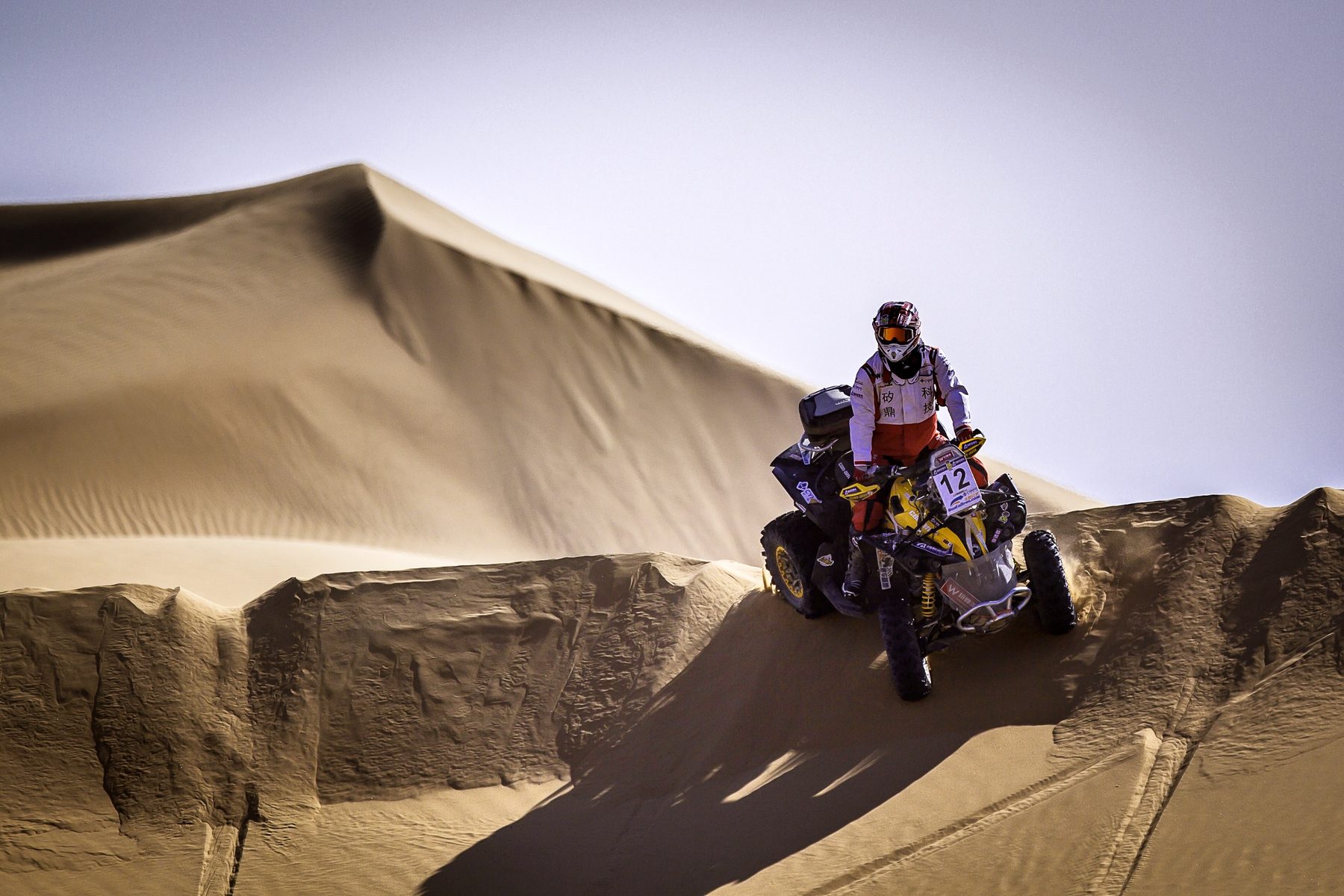
The landscapes in which we worked—desert, gravel, river valleys and long overland routes—made abstraction difficult. A vehicle either functioned or it did not. A route that looked possible on paper could change with weather and local conditions. A team that sounded aligned in a meeting still had to communicate when tired, uncertain or under pressure.
The same was true of building Huaen Brothers and Little Knights. It was not enough to say that an experience could develop courage or strengthen a family. The real questions were operational. What task was a participant actually being asked to do? Was the difficulty appropriate? Who was supervising? What happened when someone lost confidence, equipment failed or the route became unsuitable? How would the experience be reflected upon afterwards?
Reality does not allow a founder to hide indefinitely behind intention.
This was one of China’s most important lessons for me. The country’s scale can encourage grand language, but its complexity punishes simple assumptions. China is not one audience, one landscape or one pattern of development. Work that is meaningful in one province, city or community may need to be reconsidered in another.
The more ambitious our vision became, the more local our attention had to be.
I also learned that a project creates its culture through repeated decisions. The way a team responds to a delay, treats a family, explains a risk or admits an error says more about its values than a mission statement. Trust is built through such moments. It cannot be added later as a communications layer.
For me, China became a school of consequence. It taught me to respect the distance between a concept and a working system. It taught me that a founder’s real product is not only what people can see, but also the quality of judgement behind it.
That lesson travelled with me when I began looking outward.
Silicon Valley
Learning Product Thinking
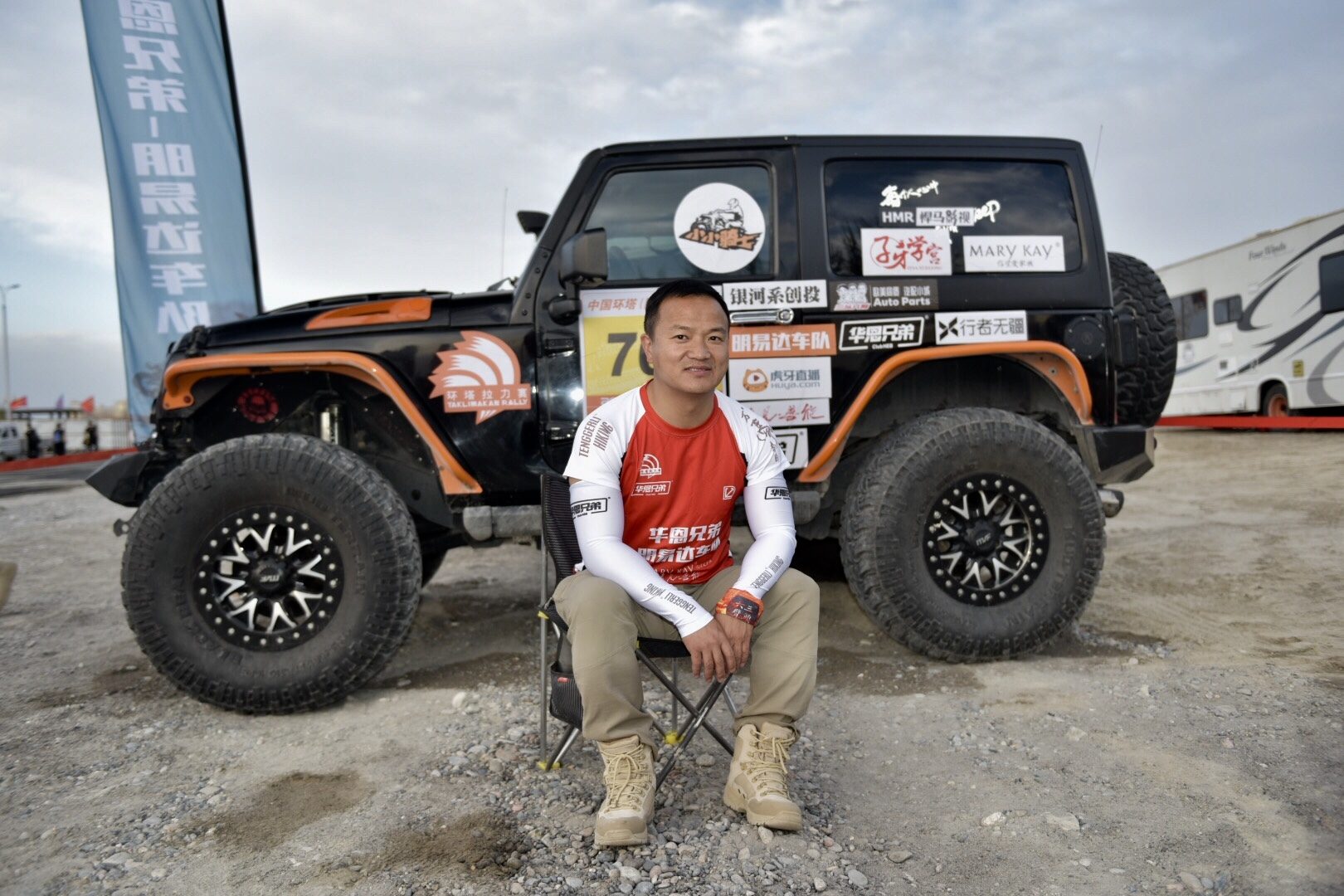
In 2015, I travelled to Silicon Valley with Huaen Brothers and presented our direction to a community of Chinese entrepreneurs, investors and technology professionals. I arrived with a rally project. I left with a different set of questions.
What problem are we really solving? Which part of the experience creates lasting value? Can the idea be understood, repeated and improved? Are we building a sequence of activities, or are we building a product and a platform?
Product thinking, as I came to understand it, is not the visual language of technology and it is not the pursuit of scale for its own sake. It is the discipline of identifying a real human need, designing a coherent response, observing how people use it, and learning from the difference between intention and behaviour.
Applied to rally, this changed my perspective. A race could be one moment inside a larger system. Preparation, learning, family participation, media, local relationships and the stories that remain afterwards could all form part of the value. The starting line was not necessarily the beginning, and the finish was not necessarily the end.
Silicon Valley also helped me see that a founder can turn specialised experience into something legible to people outside the original field. The language must change without falsifying the substance. A person does not need to understand every technical detail of rally to understand what it reveals about courage, uncertainty, cooperation and decision-making.
At the same time, I became more cautious about the idea that all friction is a defect.
Some friction is waste, and technology should remove it. Other friction is where learning and trust are formed. A difficult conversation with a local partner cannot always be compressed into a transaction. A physical journey cannot be reduced to content without losing part of its meaning. A team cannot automate responsibility.
That question eventually became central to my view of AI-age globalization.
The product question is not simply “How can this scale?” It is also “What must remain human as it scales?”
Finland
Learning the Meaning of Place
Finland taught me something different.
In 2019, I travelled with the Huaen Brothers team to Kemi in Finnish Lapland. We moved from the desert environments we knew into winter conditions that demanded a different rhythm, different equipment and different forms of attention. The contrast was physical, but the deeper lesson was cultural.
Finnish Lapland already has its own communities, knowledge, industries, histories and environmental limits. Its seasons shape daily life. Its relationship with nature is not a visual effect. Anyone who hopes to create there must begin by recognising that the place is lived before it is visited, and understood locally before it is described internationally.
This matters because international projects often arrive with a ready-made story. The landscape is selected for its beauty or symbolic power, while local people are asked to support a narrative written elsewhere. That approach may produce images. It rarely produces genuine connection.
My experience in Finland made me ask a harder question: can the place participate in shaping the project itself?
For an entrepreneur, that means listening before designing. For a brand, it means seeking relevance beyond visual association. For researchers, educators and cultural organisations, it means recognising knowledge that does not originate in the visiting institution. For filmmakers, it means allowing landscape, labour and local perspective to influence the story rather than functioning as scenery around it.
It also changed how I approached the word sisu.
Outside Finland, sisu is often translated quickly as grit, courage or resilience. Those words point towards it, but no short translation can carry a culture completely. I do not want to use sisu as decorative Nordic language attached to a foreign idea. If THE SISU RALLY is to deserve its name, its meaning must be explored in dialogue with Finnish people and through the conduct of the project—not merely asserted in branding.
Finland taught me that place has agency. It can challenge the assumptions of a project, refine its purpose and set limits on what should be done. Those limits are not barriers to international creation. They are part of what makes the creation credible.
A place is not a backdrop waiting for an outside project to give it meaning.
Artificial intelligence
The New Creative Infrastructure
AI has altered what is possible for an independent founder.
Research that once required a large team can begin with a small one. Early concepts can be visualised and tested more quickly. Languages can be crossed with less delay. Writing, design, analysis, software and media production can be brought into the same creative process.
I think of AI as a new creative infrastructure. Like other infrastructure, it expands access. It changes the distance between an idea and a first working version. It allows people who were previously separated from certain capabilities by cost, training or institutional permission to begin building.
That is a profound democratising possibility. It is not the same as democratic outcomes.
AI can produce a translation, but it cannot guarantee that the translation respects the relationship. It can generate a proposal, but it cannot create mutual commitment. It can model scenarios, but it does not bear the human consequences of a decision. It can imitate confidence even when the underlying knowledge is incomplete.
This is why I use the phrase AI-age globalization. It describes a condition in which AI lowers barriers to learning, translation, creation and cross-border coordination, while human trust and purpose remain decisive.
The opportunity is clear. A founder in Nanjing can develop an idea with people in Finland, speak to readers across Europe, prototype a global publication and learn from research around the world. The old boundary between a small creator and international capability is becoming less rigid.
The responsibility is equally clear. We need to know where information came from, whose work trained or informed a system, what data should remain private, which cultural assumptions are being reproduced, and when a fluent answer is concealing uncertainty. Speed makes provenance more important, not less.
In this environment, the rare capability will not be producing more content. It will be forming a trustworthy relationship between knowledge, experience and action.
AI can help build the bridge. It cannot decide why the bridge should exist, who is welcome to cross it, or whether it respects the ground on both sides.
The real-world experiment
THE SISU RALLY: Reconnecting People, Places and Purpose
THE SISU RALLY is my attempt to move the argument of Going Global Again out of the book and into the world.
It is being developed as a real-world intellectual property and a practical experiment, not as a finished formula. Its connection to Finnish Lapland is not meant to turn the region into a dramatic setting for someone else’s story. The intention is to explore whether a rally-inspired platform can create a more reciprocal relationship between people, place and purpose.
The rally element matters because a route changes the quality of attention. People must prepare, move, observe, decide and respond to conditions together. The experience is embodied. It is harder to remain a passive audience when weather, distance, equipment and the needs of other people are part of the day.
The family dimension matters because globalization is not experienced only by companies. It enters homes, identities, education and the choices one generation makes for the next. A Family Rally, if designed responsibly, can create a setting in which adults and younger participants share tasks and uncertainty while safety, appropriate challenge and the authority to stop remain explicit.
The international dimension matters because the project must cross more than geography. Chinese experience cannot simply be exported to Finland, and Finnish meaning cannot simply be imported into a Chinese narrative. The work lies in what can be created between them.
Film and documentary work could have an important role because a camera can preserve gestures, conditions and contradictions that a summary cannot. But the presence of a camera also creates responsibility: consent, context and authorship matter. The goal should not be to manufacture heroic images. It should be to understand what people actually learn about one another when the planned story meets the real place.
I will consider THE SISU RALLY successful only if its meaning can be seen in its conduct. The quality of local relationships will matter. The usefulness of the knowledge produced will matter. The honesty with which difficulty and uncertainty are documented will matter. Commercial discipline will matter too, because a project that cannot sustain its responsibilities cannot protect its purpose.
This is why I call it an experiment. An experiment can have direction without pretending to know the result.
- Can an adventure format produce genuine exchange rather than staged internationalism?
- Can a project create value for the place in which it occurs, not only for those who arrive?
- Can families, founders, researchers, filmmakers and local institutions encounter the same journey from different perspectives without one perspective controlling the whole story?
- Can AI support translation, research, documentation and creative production while the essential decisions remain human?
- Can an experience become international IP without becoming culturally empty?
For builders and institutions
Why This Matters for Entrepreneurs and Brands
Many international strategies still begin with a map and a target: select a market, localise the message, find distribution and increase awareness. These may be necessary steps. They are not a complete account of what it means to enter another society.
In the AI age, the surface work of internationalisation will become easier. Presentations will be more polished. Translation will be faster. Campaign variations will be almost unlimited. As these capabilities become common, they will provide less distinction.
What will become more valuable is credible experience: evidence that a company has listened, adapted, contributed and remained accountable when the project encountered reality.
For entrepreneurs, this means that global ambition should begin earlier than market entry but later than imagination. It begins when the founder asks whether an idea contains value that can be translated without assuming that every culture will receive it in the same way.
For European entrepreneurs, the lesson can run in both directions. European organisations ask how to understand and work with China, while Chinese founders ask how to enter Europe. Neither question is only about access. Both require patient translation between standards, histories, institutions and expectations. AI can make the first conversation easier; it cannot replace the relationship that makes the next conversation possible.
For brands, place-based work should create more than visual content. A brand can help convene people, support research, make a difficult project possible or bring a useful capability into a community. But the relationship should be clear enough to examine. What did the brand contribute? What did it learn? What remained locally? What responsibility did it accept?
For investors, the important question is not only whether an IP can expand. It is whether the system behind it can maintain meaning, quality and trust as it does. International growth that weakens the thing being scaled is not durable growth.
For researchers and institutions, real projects can provide valuable cases, but only when observation is documented and limitations are acknowledged. One rally cannot prove a universal theory of education, culture or entrepreneurship. It can reveal questions, decisions and patterns worth studying further.
Before taking an idea into another country, I now find four questions useful:
- Which human relationship is this project trying to strengthen, and who has a real voice in shaping it?
- Why does this work belong here, and how will local knowledge, limits and value change the design?
- What should remain after the event, campaign or investment period has ended?
- What should AI accelerate, and which judgements must remain visibly human?
These questions do not guarantee success. They slow the founder down at the point where speed can become carelessness. They also reveal whether “global” describes a genuine relationship or only the desired scale of attention.
The strongest international brands of the AI age may not be those that speak everywhere at once. They may be those that know how to listen somewhere specific, build something useful there, and let that experience change what they do next.
Looking forward
Entering the World with Better Tools—and Greater Humility
I do not see Going Global Again as a final statement, and I do not see THE SISU RALLY as proof that the questions in the book have already been solved.
The book gives the inquiry a form. The project gives it a field in which assumptions can be tested. Finnish Lapland gives the work a place that cannot be treated abstractly. AI provides new infrastructure for learning, translation and creation. The people involved will determine whether these elements become a meaningful relationship or merely an attractive arrangement of ideas.
The next stage requires patience as much as ambition. It requires conversations with Finnish partners and communities, careful definition of the project, documentation of what is known and not yet known, and a willingness to change the design when local knowledge or practical evidence demands it.
It also requires openness across disciplines. Entrepreneurs may understand how to organise uncertain work. Filmmakers may see the human narrative inside the journey. Researchers may identify questions that experience alone cannot answer. Brands may contribute capabilities that make responsible creation possible. Investors may help durable systems grow. None of these perspectives should be asked merely to endorse a finished vision. Their value lies in how they can challenge and improve it.
To go global again is not to return nostalgically to an earlier version of globalization. It is to enter the world a second time with better tools and, I hope, greater humility.
We can now connect information almost instantly. The deeper work is to build connections worthy of that speed.
AI can shorten the distance. People still have to decide how—and why—to cross it together.
James TJ Lee
Author · Founder · Global IP Creator
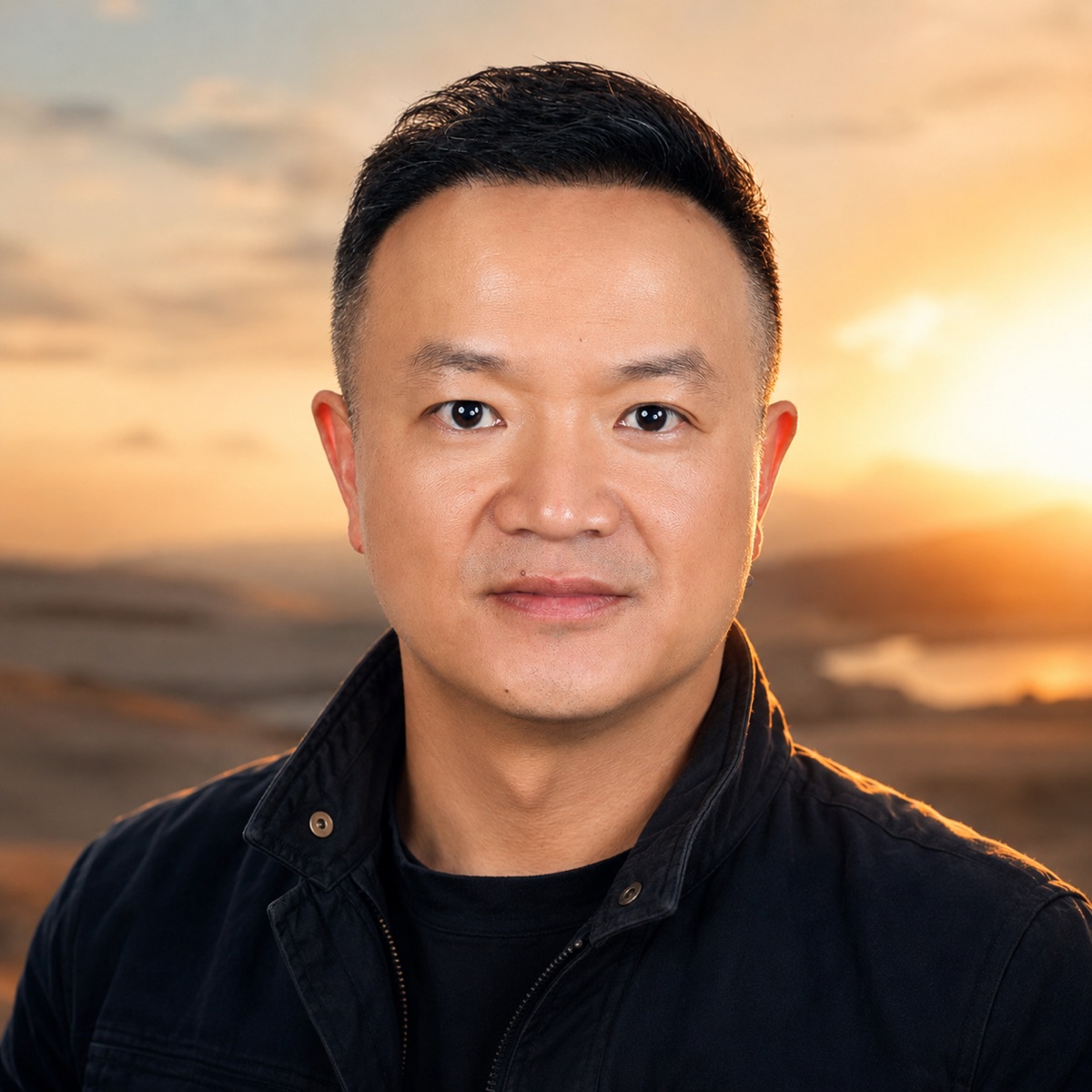
James TJ Lee, also known as Li Tiejun and 李铁军, is the founder of Huaen Brothers, creator of Little Knights, author of Going Global Again, and creator of THE SISU RALLY. His work explores globalization, AI and human connection through books, ideas and real-world projects.
Read James’s story